
Twenty-two months, one follow-up nobody scheduled, and two minutes that never made it into my chart.
A heart scan found a 4.8 cm mass in my chest in November 2024. Nobody looked at it again for eighteen months. By the time I had a name for what was actually wrong with me, I was in an ICU listening to Alex Warren and unable to breathe. This is the whole record, dates and all.
A heart scan finds something that isn’t my heart
Coronary calcium score: zero. Great news, wrong organ.
I was 40, screening for heart disease, and my arteries were spotless. The chest was only partly in frame. The radiologist saw it anyway and flagged it in Epic the same morning.
“There is a 4.8 cm mass in anterior mediastinum, indeterminant. Consider lymphadenopathy and neoplasm. Contrast-enhanced CT scan of chest recommended.”CT REPORT, ELECTRONICALLY SIGNED 11/1/2024, 10:09 AM
The recommended scan is never scheduled
Life went on and so did routine care — a mammogram in December, an IUD in February. I had a mass in my chest with a written recommendation attached to it, and for eighteen months not one person, me included, followed the recommendation.
A new doctor reads my old chart
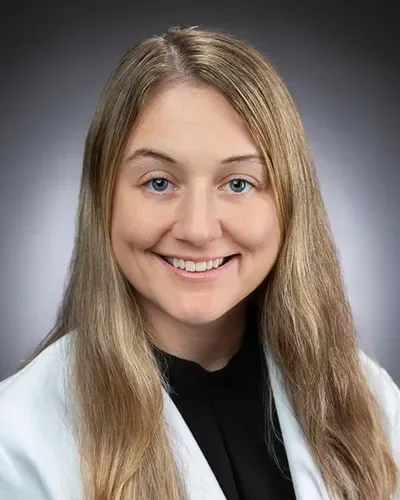
Dr. Maria Antonia Baumgartner reorders the scan
First visit. Ten labs, a losartan prescription, a low vitamin D. And the thing eighteen months of continuity of care had not produced: somebody actually scrolled back and ordered the contrast CT.
5.2 × 2.6 × 4.0 cm
CT chest with contrast, read and signed by Dr. Andrew Westmoreland at 2:40 PM the same day. Also noted: a calcified lymph node, and a separate 6 mm nodule in my right lung with its own three-month clock.
“Lobulated anterior mediastinal soft tissue mass measuring up to 5.2 cm. Differential diagnosis includes thymoma, lymphoma, or germ cell tumor. Recommend tissue sampling.”CT CHEST WITH IV CONTRAST, MAY 29, 2026
The report says “no prior exams available for comparison.” The radiologist who measured 5.2 cm never had my 2024 images on screen. So 4.8 to 5.2 cm has never actually been measured twice by one person — which matters, because growth rate is part of the question the pathology couldn’t answer.
Biopsy day, and an answer that isn’t one
CT-guided core biopsy at NGMC Braselton with Dr. Amin. Versed and fentanyl, thirty minutes of conscious sedation, a 19-gauge needle placed through the sternum, six core samples. Three outpatient visits logged in one day. No complications. Then two weeks of waiting for a report that shrugged.
“Scant thymic tissue present… differential diagnosis includes a thymoma versus reactive thymic tissue. Another sample is advised if clinically indicated.”SURGICAL PATHOLOGY, JAIME MOREL RUIZ, MD
Nine immunostains found no definitive malignancy. Worth being precise here, because I got this wrong myself at first: the tissue was thymus, and the report could not tell a thymoma from ordinary reactive thymus. That is why surgery replaced a second needle. A bigger specimen is the only thing that answers it.
A tidy surgical plan, and the blood test that undid it

One small incision, home the same day
Well-encapsulated, clean tissue plane off the major vessels, thymic carcinoma not expected. No PET needed. Single-port subxiphoid robotic resection, likely same-day discharge. Surgery on the books for August 25. I left that appointment feeling like I’d gotten off easy.
The routine screen. The actual pivot point.
Myasthenia gravis antibodies get drawn on suspected thymoma as a matter of course, because roughly 40 percent of thymoma patients have MG. Nobody was worried. I had zero symptoms. Then Mayo ran it.
“This antibody profile, in an appropriate clinical and electrophysiological context, is strongly supportive of autoimmune myasthenia gravis. A paraneoplastic basis should be considered; thymoma is the most commonly associated tumor.”MAYO CLINIC LABORATORIES INTERPRETATION
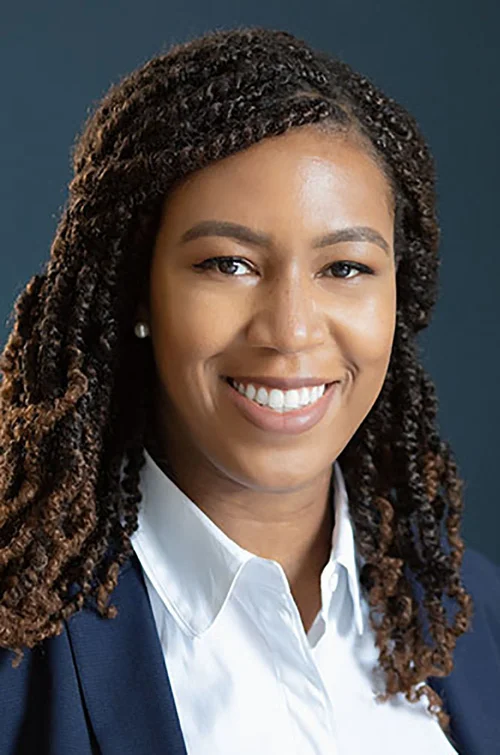
Neurology, with nothing to examine
A strongly positive antibody result in a woman who felt completely fine. Seven days before that stopped being true.
First symptom, at a Noah Kahan concert
My eyes started drooping. That’s it. That’s the whole dramatic onset. The day myasthenia gravis stopped being a lab value and started being my face. Twenty-six days before the crisis.
Double vision, then I took myself off the road
Diplopia arrived within the week. Screens became hard to look at. My eyes were visibly droopy on Zoom calls all week. On Friday July 31 I stopped driving — four days after the first symptom, and a full month before a neurologist formally told me not to. I want that on the record for anyone reading this and waiting for permission.
Escalation, and then a phone call about money
New ocular symptoms reported by telemedicine on the 4th; IVIG intake began the next day. One gram per kilogram over two consecutive days, about 35 grams a day, home infusion by pump with a nurse present. Then the coverage call: $4,500 deductible already met, $12,700 of out-of-network maximum left, roughly $8,200 potentially owed, roughly $6,000 already spent on scans and biopsies. I moved to an in-network pharmacy rather than absorb it. This is a real part of the disease and nobody puts it in the timeline.
Breathing, after a Braves game
First or second breathing episode. By then: shallow breathing at night, a voice that was nasal almost constantly, sleeping upright. The pattern had walked from ocular to bulbar to respiratory, which is the pattern that precedes a crisis. Six days later I was in an emergency room.
The week before the hospital, when it stopped being my eyes
I was already in crisis a week before anyone admitted me. My neck went weak — it felt like a concrete block was sitting on top of it and I couldn’t hold my head up. My fingers wouldn’t type. I couldn’t play Roblox with my kids. I couldn’t physically play piano. Raising my arms above my head felt like work. My voice was nasal almost all the time.
On Sunday August 16 I couldn’t put on my own makeup. At church that morning my eyes were so bad they were closed, and someone had to walk me in.
This is the part I want other patients to see. By this point it was not ocular anymore. It was my neck, my hands, my arms, my voice — generalized weakness, which is the definition of the thing that had already started. I was two days from an emergency room and still calling it a bad week.
Ten days inpatient
Twenty squats in a hospital gown
Admitted to Emory University Hospital in myasthenic crisis. Sixteen results in a single day, fourteen of them ordered by Dr. Esme Trahair. Then I did twenty squats in a hospital gown in front of two neurologists, because squats to exhaustion are the standard bedside test for the fatigable weakness that defines this disease. It is undignified and it is also the whole diagnosis.
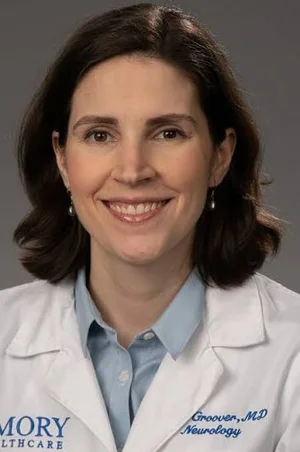
Examined me, said she was on the fence, and made the call anyway: plasma exchange, five sessions over ten days, not IVIG. The deciding factor was my breathing. IVIG takes one to two weeks to work. Plex works in days. She took it to Dr. Nwebube and it stuck.
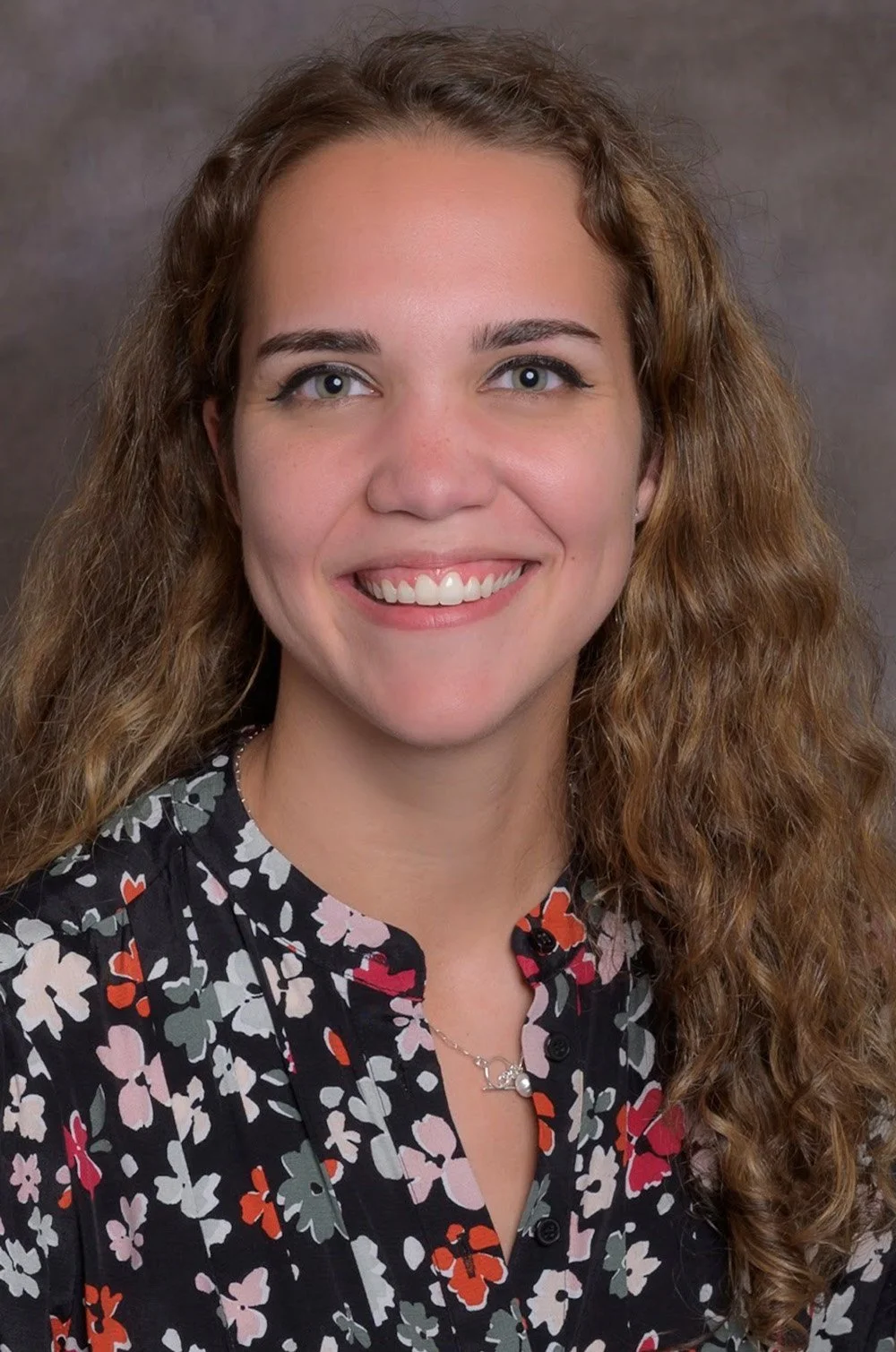
Ordered fourteen of my sixteen day-one results: chest x-ray, arterial blood gas with co-oximetry, ECG, respiratory viral PCR, and a full coagulation workup. The second witness to the squats.
Dr. Groover made the most consequential decision in this entire record. My chart shows exactly one abnormal glucose under her name.
A vascath, the first plasma exchange, and two minutes
Vascath placed by Krista Garner, NP. Confirming chest x-ray, cryoprecipitate prepared, baseline fibrinogen. My record labels the vascath “CENTRAL LINE.” First plex ran that day.
Then, in the ICU, I was listening to Alex Warren’s “Ordinary” when I suddenly could not breathe.
I looked at my husband, rang the nurse button, and said “help.” Krista Garner came in and manually bagged me to get air into my lungs. She was calm. It was about two minutes. I was on oxygen that night.
Nine lab results and a central line for that day. Not the two minutes. The only trace anywhere is one line Dr. Sancheti wrote two weeks later: “Near-intubation during myasthenic crisis: team was bagging at bedside.” I am the primary source for the most important moment in my own medical history. That is why I’m writing all of this down.
Five plasma exchanges, and a nurse named Eddie
Each session: plasma out, seven or eight bags of albumin in, a calcium drip running the whole time to offset the anticoagulant. Fibrinogen drawn on seven separate days and abnormal on all of them, because plex strips it out. Cryoprecipitate on the 20th and the 22nd to put it back.
Eddie Reynolds II, a critical care nurse practitioner at Emory, was at my bedside. He explained why the plex was dropping my fibrinogen, what that meant for bleeding, and why I needed the cryo — then brought the consent and administered it. He appears zero times in my chart, because charts list ordering providers and not the person at the bedside. His name is in the blood product administration record for 8/22, which required two-nurse verification. I recorded him spelling it out for me: “Eddie, E-D-D-I-E, like Eddie Murphy.” It took me until September to find him again, and I found him on LinkedIn.
His reasoning, on why he wasn’t going to let the fibrinogen slide and wait: he didn’t want to f*** up and find out.
The surgery that did not happen
This was the day of the one-incision outpatient operation. I spent it inpatient, in crisis, seven floors up.
A blood clot
CT chest with contrast read by Dr. Hang Shi. High-sensitivity troponin, BNP, abnormal lactic acid. Clots identified. A pulmonary embolism, judging by the Eliquis DVT/PE treatment pack started the next day and the note eleven days later calling it “the PE.”
Discharged on eight new prescriptions
An echocardiogram, then out the door with Eliquis, prednisone, pyridostigmine four times daily, pantoprazole, calcium carbonate, vitamin D3 and mirtazapine at bedtime. I walked in for droopy eyes and left ten days later with a pill organizer.
Staying stable long enough to get operated on
The honest post-crisis inventory
Follow-up with Dr. Nwebube. Double vision roughly 80 percent of the time. Ptosis daily but improving. Chewing effortful but safe. No swallowing or breathing trouble. Limbs strong on exam. The plasma exchange was wearing off. Plan: IVIG immediately as a bridge, then Vyvgart — weekly for four weeks, then four off. Hold the Mestinon and prednisone. Hyoscyamine for the Mestinon side effects. Referral to neuro-ophthalmology for prism glasses. A handicap tag. Still not cleared to drive.
Actual good news, for once
Dr. Sancheti again. The mass has shrunk significantly on CT, credited to the plasma exchange and high-dose steroids. IVIG delivered to my house that day, repeating every three weeks. The operation has changed shape: a full thymectomy now rather than resecting the mass alone, tentatively September 22, pending sign-off from neurology and hematology.
2 PM with Dr. Khan
Building the PE plan around a September 22 surgery date. Home IVIG infusions being scheduled this week. The entire job right now is staying stable enough to be operated on.
And the question that started all of this — thymoma or reactive thymus — still has no answer. The final pathology comes from the thymectomy specimen. It does not exist yet.
Songs are how I remember the dates
My eyes first drooped at a Noah Kahan concert. The night I couldn’t breathe, I was listening to Alex Warren’s “Ordinary.” I can’t hear either of them the same way now, so I made a playlist of the whole thing.
Six things I’d do differently, written down so you don’t have to learn them the way I did
Every one of these comes from a specific gap in my own record. None of it is hypothetical.
Mine recommended a contrast CT in 2024. Nobody scheduled it, including me, because I never read the words “recommended” in the report. Eighteen months.
“No prior exams available for comparison” is a sentence you can fix with a phone call. Records from another health system do not travel on their own.
A 6 mm lung nodule with a three-month clock, unrelated to everything else happening to me. Those are exactly the ones that get lost. Ask whose job it is.
Nearly everything human in this timeline — the reasoning, the nurses, the near-intubation — exists only because I recorded it. The chart holds the labs. You have to hold the rest.
Eyes, then voice and chewing, then breathing. When it reaches your voice you are already on a clock. I stopped driving on my own; I should have escalated on my own too.
My antibody report warns that the assay reagent changed, so “direct quantitative comparison to previous testing results is not advised.” If they redraw it, ask whether 7.97 is still a valid baseline.
This is one person’s record. Yours is worth writing down too.
New episodes, patient resources and the rest of my journey at willuMGwithme.com. If you’re newly diagnosed and reading this at 2 AM: hi. You’re not the only one.
Follow the journey →